
Replace a missing tooth with a bridge that looks and works like the real thing.
A durable, natural-looking way to close the gap, with most PPO plans accepted and your full cost in writing before treatment starts.
What is a dental bridge?
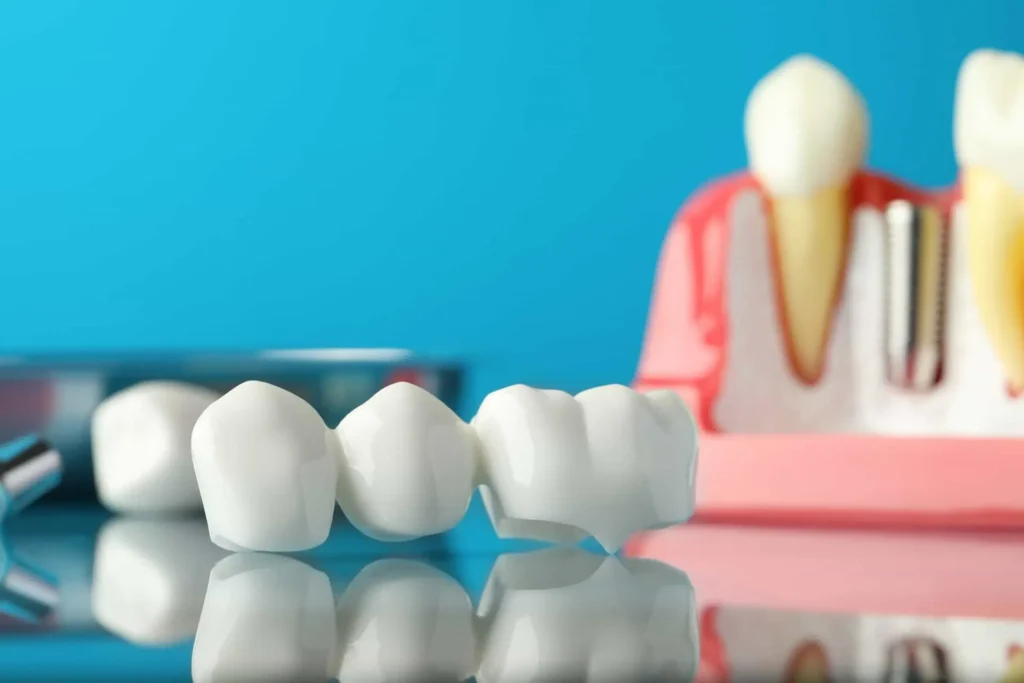
A dental bridge replaces a missing tooth by anchoring a natural-looking replacement to the teeth on either side, and it is one of the most common restorative treatments we place at our Las Vegas office. The replacement tooth, called a pontic, sits in the gap and is held by crowns on the teeth on either side. Bridges sit alongside crowns and fillings in our restorative care options.
The result is cemented in place. You eat, speak, and smile with it like a natural tooth, and it stays in your mouth full-time.
The four types of dental bridges
The most common type. A pontic anchored by crowns on the two neighboring teeth. Works for most single-tooth gaps.
Anchored on one side only, used when only one healthy tooth sits next to the gap. Less common.
A framework bonded to the backs of the neighboring teeth instead of full crowns. Less invasive, typically less durable, and sometimes used for front teeth.
Anchored by dental implants instead of crowns on natural teeth. The most stable option for larger gaps.
At your consultation, your dentist will examine the gap and the neighboring teeth and recommend the type that fits your situation.
What should you know before choosing a bridge?
A bridge is a solid, proven option. It also comes with a few realities worth understanding before you decide, and we would rather you hear them from us up front.
A traditional bridge means the two teeth beside the gap are shaped down to accept the anchor crowns. Those teeth are permanently altered, even if they were healthy before. This is the main trade-off compared to an implant.
A bridge is one connected piece, so flossing under the pontic uses a floss threader, a small looped tool that guides the floss through. It takes a minute to learn and a few seconds a day. We’ll show you how at your placement visit.
A missing tooth root means the jawbone in that spot gradually shrinks. A bridge replaces the visible tooth, and an implant is the option that also preserves the bone. If that matters for your situation, our full dental bridge vs. implant comparison lays both paths out side by side.
A bridge remains the better fit for many patients, especially when the neighboring teeth already need crowns or when treatment time matters. Many of the bridge patients we see are Las Vegas retirees finally closing a gap they’ve lived with for years, and a bridge gets them there in two visits. The goal is that you understand both paths before you choose one.
How much does a dental bridge cost in Las Vegas?
The final number depends on the type of bridge, the materials, and how many teeth are being replaced.
Per crown or pontic
Two anchor crowns plus the pontic, before insurance
Most PPO plans cover a portion of a bridge, and we accept most PPO plans. We verify your benefits before your visit and put your full cost in writing before any work begins, so you decide with the real number in front of you. If you’d rather spread the cost out, we offer flexible ways to pay through our insurance and financing options.
What to expect
- Cost Quoted after your exam
- Re-cement a bridge Cost depends on your treatment plan, and we give you the exact figure in writing before any work begins.
Book a visit
No rush. No judgment. No surprises.
What happens when you get a bridge?
Both visits happen at our Las Vegas office, and most patients leave the second one ready to eat normally.
Your dentist shapes the neighboring teeth, takes impressions, and places a temporary bridge to wear in the meantime.
Your permanent bridge is custom-made at a dental lab to match the shape and shade of your teeth. We’ll give you the exact timeline at your first visit and schedule your second appointment before you leave.
Your dentist removes the temporary, checks the fit, color, and bite, then cements the permanent bridge in place.
Common questions
Everything you need to know before your first visit.
How much does a dental bridge cost?
Most PPO plans cover a portion. We verify your benefits and give you the full cost in writing before any work begins.
Is a bridge or an implant better?
It depends on your situation. A bridge is typically faster and less invasive up front. An implant preserves the jawbone and leaves the neighboring teeth untouched. Bone health, the condition of the adjacent teeth, your timeline, and your budget all factor in, and your dentist will walk you through both at your consultation.
How long does a bridge last?
With regular care and cleanings, most bridges last 10 to 15 years. Daily cleaning under the pontic with a floss threader makes a real difference in how long yours lasts.
Does getting a bridge hurt?
The area is numbed with local anesthetic, so the preparation visit is comfortable for most patients. Some tenderness for a day or two afterward is normal. The placement visit is usually quick and easy.
Can a bridge replace more than one tooth?
Yes. A traditional bridge can span two or even three consecutive missing teeth, with anchor crowns on the teeth at each end. Larger gaps are often better served by an implant-supported bridge.
Do you take my insurance?
We accept most PPO plans. Send us your plan details when you book and we’ll check your coverage for you before your visit.

A bridge is a proven way to close the gap and get back to eating and smiling normally.
One consultation at our Las Vegas office gives you the full picture: your options, your real cost in writing, and a plan you can act on.
Book a visit
No rush. No judgment. No surprises.