
Root canals in Las Vegas that save your tooth
A root canal clears the infection inside your tooth and relieves the pain, so you can keep the tooth instead of losing it.
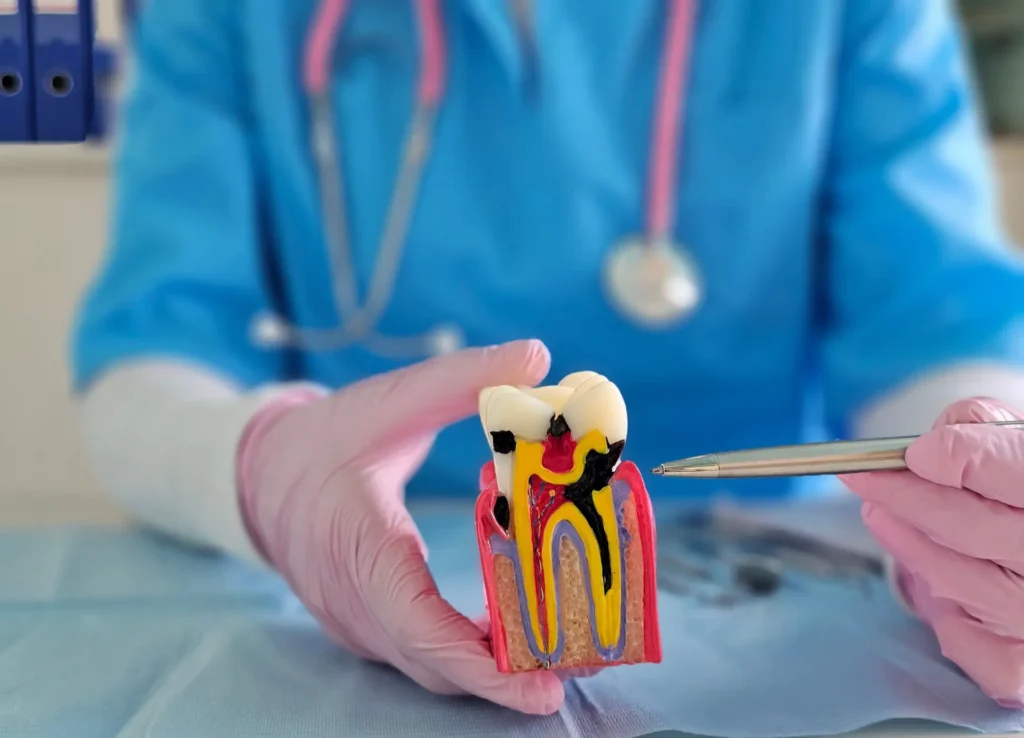
How do I know if I need a root canal?
A few signs tend to show up when the nerve inside a tooth is infected or inflamed:
Only an exam and an X-ray can confirm what’s happening inside the tooth. If you’re in pain right now, see what to do about a toothache while you wait for your appointment.
- Lingering pain that doesn't settle down
- Sensitivity to hot or cold that lingers well after the trigger is gone
- Pain when chewing or biting down
- A pimple-like bump on the gum, or swelling
- A tooth that has darkened compared to those around it
Book a visit
No rush. No judgment. No surprises.
Does a root canal hurt?
It’s a fair question, and probably the biggest thing standing between you and booking. Here’s the honest answer: a root canal relieves pain, it doesn’t cause it. The tooth is thoroughly numbed before we begin, and most patients say it feels similar to getting a filling.
The procedure is designed to end the pain you came in with, not add to it.
Mild soreness for a day or two afterward is normal and manageable — most patients find it easier than they expected.
What happens during a root canal?
A root canal is one of several restorative care treatments we use to save a tooth that’s infected or badly damaged, rather than remove it.
We numb the tooth completely.
We remove the infected or inflamed pulp inside the tooth.
We clean and shape the inside of the tooth.
We seal the tooth, and in most cases place a dental crown afterward to protect it.
It usually takes one to two visits, depending on the tooth and how much infection there is to clear.
What happens if I don’t get a root canal?
The infection inside the tooth doesn’t resolve on its own. Left alone, it can spread beyond the tooth and turn into an abscess, a more serious and more painful problem.
In most cases, an untreated infected tooth eventually has to be removed, and a missing tooth needs to replace the tooth to protect your bite and the teeth around it. Treating it now, while the tooth can still be saved, usually keeps things simpler.
Root canal vs. extraction
If a tooth can be saved, these are usually the two options on the table.
Usually the more conservative choice, and often more economical long-term once you factor in what it takes to replace a missing tooth.
An tooth extraction leaves a gap that typically needs a bridge, implant, or denture afterward to restore chewing and keep other teeth from shifting.
Both are legitimate options. We’ll walk you through what applies to your specific tooth before you decide.
Cost & insurance
Root canal cost depends on which tooth is involved — front teeth are simpler to treat and typically cost less than molars, which have more canals to clean out. A crown to protect the tooth afterward is usually a separate cost.
Most PPO plans cover a portion of root canal treatment. We verify your benefits and give you your cost in writing before we start, so there are no surprises partway through. For larger cases, we also offer insurance and financing options.
If you’re in active pain, we can often see urgent, infected-tooth cases the same day, so it isn’t left to spread over a weekend.
What to expect
- Cost Quoted after your exam
- Front tooth Cost depends on your treatment plan, and we give you the exact figure in writing before any work begins.
- Premolar Cost depends on your treatment plan, and we give you the exact figure in writing before any work begins.
- Molar Cost depends on your treatment plan, and we give you the exact figure in writing before any work begins.
Book a visit
No rush. No judgment. No surprises.
Common questions
Everything you need to know before your first visit.
Does a root canal hurt?
No — a root canal relieves pain, it doesn’t cause it. The tooth is thoroughly numbed beforehand, and most patients say it feels similar to getting a filling. Some mild soreness for a day or two afterward is normal and manageable.
How much does a root canal cost without insurance?
It depends on which tooth is involved — front teeth cost less to treat than molars, and a crown afterward is usually a separate cost. We verify your insurance benefits and give you your exact cost in writing before any treatment starts.
How long does a root canal take?
Most root canals are completed in one to two visits, depending on the tooth and how much infection there is to clear.
Do I need a crown after a root canal?
In most cases, yes. A root canal removes the tooth’s nerve and blood supply, which leaves it more brittle. A crown protects the tooth and restores its strength, especially on molars that do the heavy work of chewing.
What happens if I wait or skip it?
The infection doesn’t resolve on its own. It can spread, turn into an abscess, and usually leads to losing the tooth, which then has to be replaced. Treating it earlier keeps your options open.
Is it better to pull the tooth instead?
Usually not. A root canal keeps your natural tooth and is typically the more conservative option. Extraction removes the tooth and leaves a gap that needs replacing. We’ll tell you honestly which one applies to your situation.

Ready to find out if your tooth can be saved?
A painful tooth won’t fix itself. Book a consultation and we’ll tell you whether a root canal can save it, with your cost in writing.
Book a visit
No rush. No judgment. No surprises.